

On 25 September 2026 custom matches on CYBERSHOKE got BO3 and BO5 formats — series played to two and three map wins. They arrived together with map veto, location veto and the option to draft players from the waiting list. In other words, your own match now runs by the same rules tournaments use.
All of it lives in the custom matches section: a lobby goes up in a couple of clicks, with no server rental and no config files.
What BO3 and BO5 mean in CS2
BO stands for best of. BO3 is a three-map series won by the first team to take two maps; BO5 is a five-map series played to three wins. The score counts maps rather than rounds: 2:0, 2:1, 3:2 and so on.
Every major tournament uses the format for one reason: a single map says little about who is stronger. On a comfortable map the weaker side wins often enough, while a series forces both teams through several different map pools and makes them recover after a loss.
BO1 vs BO3 vs BO5: what changes
BO1 is one map and one result — fast, but largely decided by which map came up. BO3 removes most of that randomness and runs about two hours. BO5 is the grand final format: five maps, nearly the whole pool, and by the end it shows who holds up physically.
- BO1 — one map, 30–50 minutes. Fine for a quick game.
- BO3 — first to two, 1.5–2.5 hours. The standard for team scrims.
- BO5 — first to three, 2.5–4 hours. For finals and long evenings.
How to play a BO3 or BO5 with friends
The format is picked when you create the lobby, next to map and round settings. After that it works like any custom match: invite players by link, sort them into teams and start. The server switches maps between games and keeps the series score itself.
Short on players? Empty slots are filled with bots, and that does not break the series. When the match ends you get a result page: map-by-map score, per-player stats, average team ELO and a demo you can download and review.
How map veto works in CS2
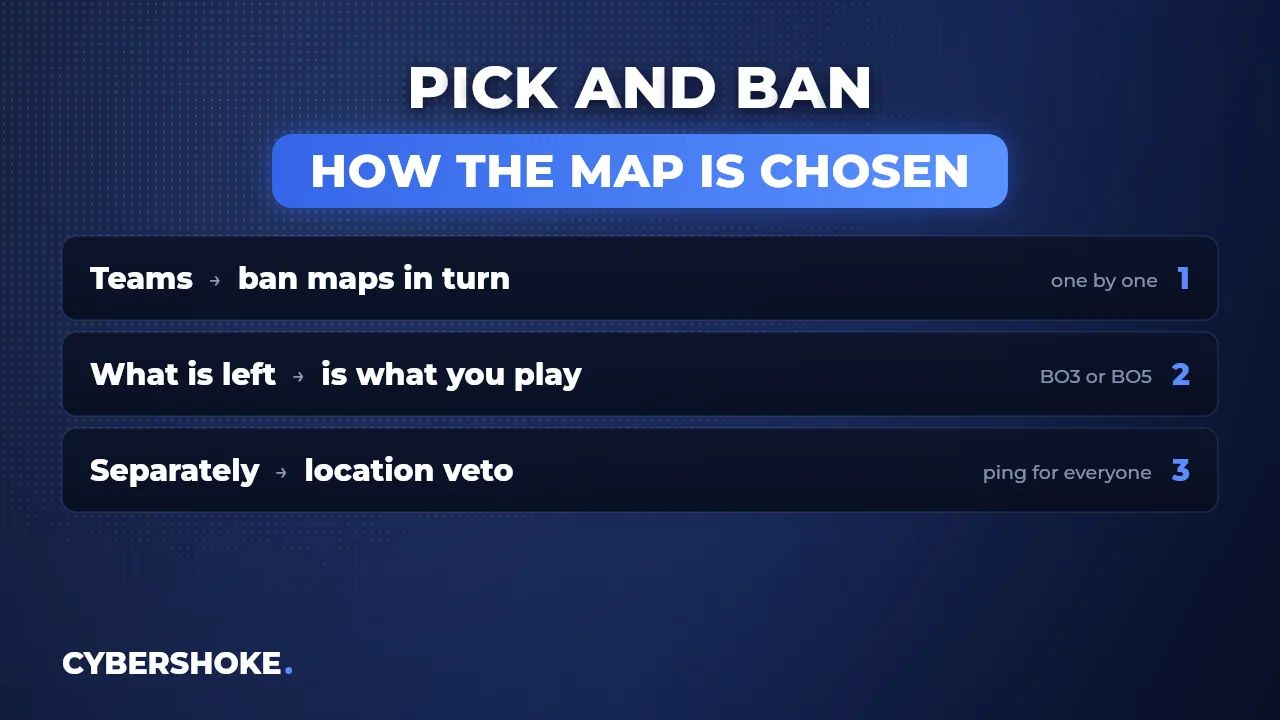
Before the series starts, teams take turns removing maps they do not want. What is left goes into the series: three maps for a BO3, five for a BO5. Previously the host simply picked a map; now it is a full veto procedure, the same one you see on stage.
The practical value is preparation. A team confident on Nuke and Ancient but shaky on Mirage bans Mirage first. The opponent does the same from their side, and the series narrows down to maps both sides actually prepared.
Location veto: why choosing the server matters
The second half of the veto is the location. CYBERSHOKE servers run in 29 locations, and ping between two teams from different regions can differ a lot. Now the location is chosen through pick and ban as well, instead of being set by the host.
That settles the old argument of "we have 15 ms, you have 60". Both sides remove the uncomfortable points and stop on one where the game feels equal — particularly useful when opponents come from different countries.
Drafting players from the waiting list
When more people join than the lobby needs, the extras land in a waiting list — and the host can now pull players from there into teams. Handy for open matches: you see who connected and build the rosters deliberately instead of rewarding whoever clicked first.
The same menu holds the quick host tools: balance the teams, shuffle randomly, swap players or send someone back to waiting.
Workshop maps in custom matches
The update also opened up Steam Workshop maps — any of them, not just the official pool. That widens what a lobby is for: one night you play a serious series on active duty maps, the next you run an evening on experimental or joke maps.
For players who train it also means access to purpose-built utility and aim maps that regular matchmaking does not offer. The rest of the modes, including maps we build ourselves, are on the CS2 modes page.
How long a BO3 and BO5 take
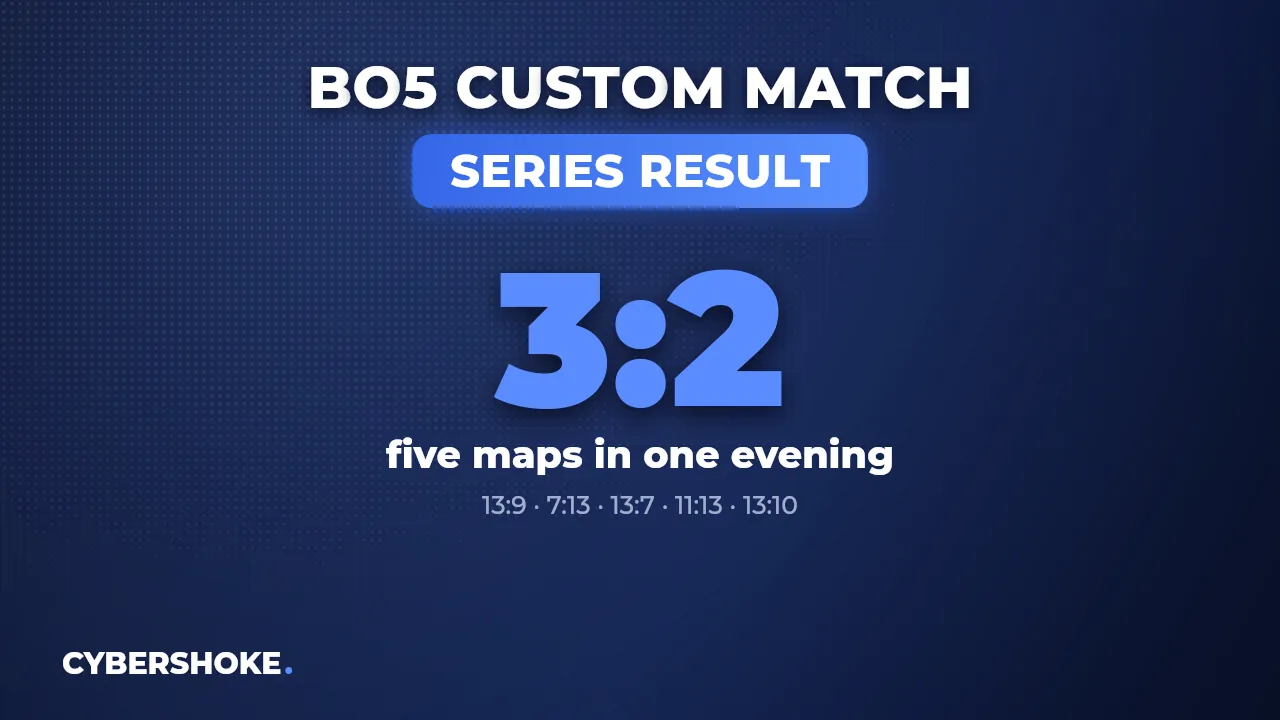
An MR12 map to 13 wins averages 30–45 minutes, longer with overtime. The arithmetic follows: a BO3 runs from an hour and a half to two and a half, a BO5 from two and a half to four. The 3:2 series in the screenshot above went the distance.
If that is too long, a BO3 also works in a shortened form — the round count is configurable in the same lobby menu, which cuts the series noticeably.
FAQ
What does BO3 mean in CS2?
A three-map series won by the first team to take two maps. The score counts maps: 2:0 or 2:1.
What does BO5 mean?
A five-map series played to three wins — the grand final format: 3:0, 3:1 or 3:2.
How do I play a BO3 with friends in CS2?
Create a custom match on CYBERSHOKE, choose the BO3 format in the lobby settings and send the invite link. The server switches maps and tracks the series score for you.
How does map veto work?
Teams take turns removing maps they do not want to play. What remains forms the series: three maps for a BO3, five for a BO5. The server location is chosen the same way.
Can I play on Workshop maps?
Yes, custom matches accept any map from the Steam Workshop, not only the official pool.
Source
BO3 and BO5 formats, map veto and location veto arrived on 25 September 2026 — the entry is in the CYBERSHOKE updates section. Build your own series on the custom matches page.